
I still remember my first real job at a logistics startup, sitting in a cramped office while a “state-of-the-art” system crashed for the third time that morning. We had spent a small fortune on high-end hardware that promised seamless connectivity, but our actual network infrastructure was a tangled, unoptimized mess of legacy cables and poorly configured routers. It wasn’t a lack of expensive gear that killed our productivity; it was the sheer complexity of a setup that was built to look impressive on a spreadsheet rather than actually function in the real world.
I’m not here to sell you on some overpriced, enterprise-grade fantasy that requires a PhD to maintain. My goal is to strip away the marketing fluff and show you how to build a foundation that actually holds up under pressure. I’ll be sharing the exact, no-nonsense frameworks I use to audit and optimize systems, focusing on stability and speed rather than shiny new toys. If you want to stop firefighting connection errors and start building a setup that just works, you’re in the right place.
Table of Contents
Forget Complex Enterprise Network Architecture
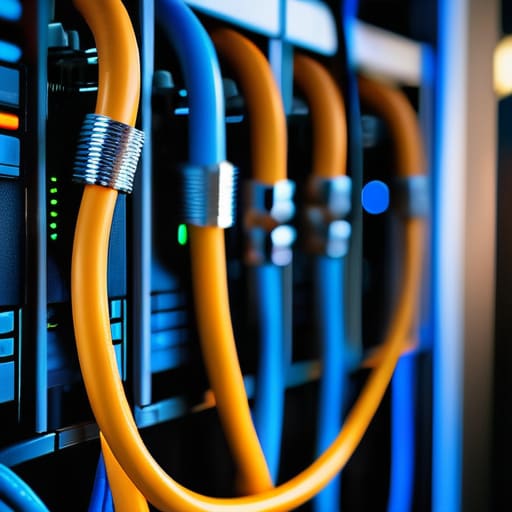
I see companies falling into the same trap every single time: they try to build a massive, sprawling enterprise network architecture before they even have a stable workflow. They get obsessed with buying every high-end switch and redundant router on the market, thinking more hardware equals more stability. It doesn’t. In my experience working in logistics, the most “advanced” setups were often the ones that crashed most frequently because they were too brittle and over-engineered for the actual daily load.
You don’t need a massive, onsite data center to scale. Most of the time, you’re better off focusing on smart cloud computing integration that lets you scale up or down without managing a physical graveyard of servers. Instead of getting lost in the weeds of complex hardware, focus on a setup that prioritizes minimal friction. If your setup requires a PhD to troubleshoot every time a single node goes down, you haven’t built a system; you’ve built a liability. Keep your topology clean, keep your connections intentional, and stop trying to solve problems you don’t actually have yet.
Prioritize Real Data Center Scalability Over Hype

Everyone wants to talk about the latest “AI-driven” hardware, but most of that is just marketing fluff designed to drain your budget. In my experience, true data center scalability isn’t about buying the most expensive rack you can find; it’s about building a foundation that doesn’t crumble the moment your traffic spikes. If your setup can’t handle a sudden influx of users without a total meltdown, you haven’t built a system—you’ve built a liability.
I’ve seen too many teams obsess over flashy cloud computing integration while their core physical layer is a mess. You can’t just throw a hybrid cloud solution at a broken foundation and expect it to fix your performance issues. Instead, focus on a modular approach. Build your capacity in stages so you aren’t over-provisioning hardware you won’t actually use for another two years. It’s about smart, incremental growth rather than chasing every shiny new feature that promises to revolutionize your workflow. Keep it lean, keep it scalable, and stop paying for capacity you haven’t earned yet.
5 Ways to Stop Your Network From Becoming a Bottleneck
- Automate your routine tasks. If you’re still manually configuring every single switch, you’re doing it wrong. Use automation scripts or orchestration tools so you can spend your time solving actual problems instead of doing grunt work.
- Monitor what actually matters. Don’t get buried in a dashboard of a thousand flashing lights. Focus on latency, packet loss, and uptime. If you can’t see the signal through the noise, your monitoring tool is just more clutter.
- Standardize your hardware. I’ve seen too many setups where every department buys their own “special” gear. It’s a nightmare to maintain. Stick to a consistent stack so you aren’t learning a new OS every time a device fails.
- Build in redundancy, but don’t overspend. You need failovers for critical paths, obviously, but don’t go out and buy triple-redundant everything if your budget is tight. Find the sweet spot where a single point of failure won’t kill your entire operation.
- Document your topology like your job depends on it. There is nothing worse than a midnight outage and realizing no one knows how the VLANs are actually mapped. Keep a clean, updated diagram so you aren’t guessing when things go south.
The Bottom Line: Stop Overcomplicating Your Setup
Stop chasing enterprise-grade complexity if you don’t have the team to manage it; build for the scale you actually have, not the scale you hope to have in five years.
Prioritize hardware and architecture that scales predictably so you aren’t stuck doing emergency migrations every time your data load spikes.
If a tool or a configuration doesn’t directly reduce your operational friction or save you mental energy, it’s just noise—cut it out.
The Real Cost of Complexity
Most people treat network infrastructure like a status symbol, buying every shiny new piece of hardware just to say they have it. But if your setup requires a PhD to troubleshoot every time a packet drops, you haven’t built a system—you’ve built a liability.
Mateo Salcedo
Stop Chasing the Hype and Start Building

Look, we’ve covered a lot, but the takeaway is simple: stop building networks for a future that doesn’t exist yet and start building for the reality you’re actually facing. You don’t need a massive, bloated enterprise architecture if your current workload doesn’t demand it. Focus on scalable data centers that provide actual headroom, rather than buying into expensive, shiny hardware that just sits there collecting dust. The goal isn’t to have the most complex setup in the room; it’s to have a reliable, streamlined system that stays out of your way so you can actually get your work done without constant troubleshooting.
At the end of the day, your infrastructure should be invisible. If you’re spending more time managing your network than you are using the tools that run on it, you’ve already lost. My advice? Strip away the noise, prioritize functional stability, and build a foundation that supports your growth instead of complicating it. Don’t let the fear of being “behind” on tech trends drive you into overengineering a mess. Just build something that actually works, stays stable, and lets you focus on what matters.
Frequently Asked Questions
How do I know if my current setup is actually a bottleneck or if I'm just overthinking it?
Look at your latency and error logs, not your gut feeling. If your team is literally waiting for data to move or if your deployment pipelines are stalling because the hardware can’t keep up, you have a bottleneck. If you’re just staring at a dashboard wondering if you could “optimize” more, you’re overthinking it. Don’t upgrade for the sake of a new spec sheet; only fix what’s actually slowing down the workflow.
What’s the bare minimum hardware I need to scale without burning through my entire budget?
Look, you don’t need a rack full of blinking lights to scale. Start with a solid, managed switch that actually has the throughput you’ll need in eighteen months, not just today. Grab a decent edge router that won’t choke when your traffic spikes, and invest in a reliable NAS for local redundancy. Don’t buy the “pro” tier just because a salesperson said so; buy hardware that handles your current load with room to breathe.
Is it actually worth migrating to a cloud-hybrid model, or am I just adding more layers of complexity?
Look, if you’re doing it just because “everyone else is,” you’re probably just adding noise. Hybrid models only make sense if you have specific workloads that need local speed or strict compliance, but can’t justify the cost of keeping everything on-prem. If your current setup isn’t breaking and your latency is fine, don’t chase the complexity. Only migrate if it solves a bottleneck, not to check a box on a tech trend.
