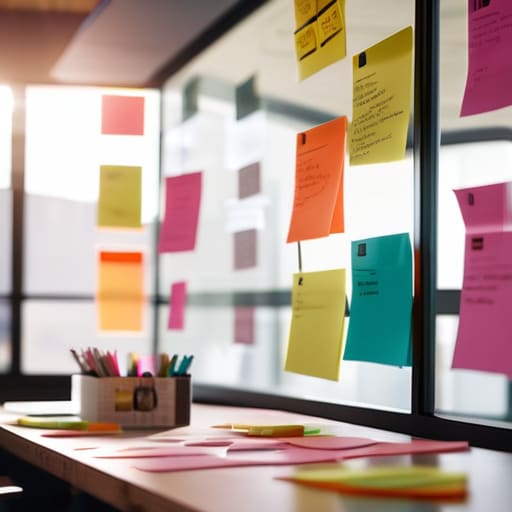
I spent three years in startup logistics watching brilliant teams drown in “process” that existed only to justify a massive software subscription. I’ve seen people spend more time updating Gantt charts and color-coding Kanban boards than actually shipping product. Most of the advice you see online about project management methodologies is just expensive noise designed to make you feel like you’re being productive when you’re really just moving digital paper around. If a framework requires a three-day certification course just to understand how to assign a task, it’s not a tool—it’s a bottleneck.
I’m not here to sell you on a complex system that requires a dedicated specialist to maintain. My goal is to strip away the fluff and show you which project management methodologies actually move the needle and which ones are just performative busywork. I’ve tested these workflows in high-pressure environments, and I’m going to give you the unfiltered truth about what works for real-world output. We’re going to focus on systems that save you mental energy, not ones that add more tabs to your browser.
Table of Contents
- The Truth About Waterfall vs Agile Comparison
- Cut the Noise With Agile Project Management Principles
- Stop Over-Engineering Your Process: 5 Ways to Actually Get Things Done
- The Bottom Line: Stop Overthinking Your Process
- The Methodology Trap
- Stop Searching for the Perfect System
- Frequently Asked Questions
The Truth About Waterfall vs Agile Comparison

Most people treat the waterfall vs agile comparison like it’s some holy war, but in my experience, it’s usually just a debate about how much risk you’re willing to tolerate. Waterfall is the old-school, linear approach—you plan everything upfront, execute, and hope you don’t realize halfway through that the requirements changed. It’s fine if you’re building a bridge, but in the tech world, it’s a recipe for disaster because it lacks flexibility. If you’re stuck in a rigid software development life cycle where you can’t pivot without a month of meetings, you aren’t being organized; you’re just being stubborn.
Agile, on the other hand, is all about those iterative development processes that allow you to ship, fail, and fix things quickly. I love the speed, but don’t fall into the trap of “Agile” being an excuse for having zero documentation or a chaotic schedule. The goal isn’t to move fast and break things; the goal is workflow optimization. You need a system that actually delivers value, not just a bunch of daily stand-ups that could have been an email.
Cut the Noise With Agile Project Management Principles

Most people treat Agile like some sacred religious text, but I see it for what it actually is: a way to stop guessing and start doing. If you’ve ever spent months building a feature only to realize nobody actually wants it, you know the pain of a broken workflow. Agile project management principles are designed to kill that specific type of waste. Instead of trying to predict the next six months with perfect accuracy—which is impossible—you focus on iterative development processes that allow you to pivot before you’ve wasted your entire budget.
The real magic isn’t in the ceremonies or the fancy Jira boards; it’s in the feedback loops. When you break a massive project into smaller, digestible chunks, you aren’t just managing tasks; you’re practicing workflow optimization techniques that keep the momentum high. I’ve seen too many teams get bogged down in heavy documentation that no one reads. Forget the fluff. Use Agile to ship small wins, test them against reality, and adjust. It’s about staying lean and keeping your mental energy focused on actual progress rather than endless planning meetings.
Stop Over-Engineering Your Process: 5 Ways to Actually Get Things Done
- Stop chasing the “perfect” methodology. I’ve seen teams spend three weeks debating Scrum vs. Kanban instead of actually shipping code. Pick the simplest framework that fits your current project and move on.
- Prioritize output over ceremonies. If your daily stand-up is turning into a 45-minute status report that nobody listens to, you’re doing it wrong. Keep meetings short, focused, and strictly about unblocking tasks.
- Automate the busywork. If you’re manually updating a spreadsheet every time a task moves, you’re wasting mental energy. Use integrations to let your tools talk to each other so you can focus on the actual work.
- Limit your Work In Progress (WIP). The biggest productivity killer is context switching. Stop trying to juggle ten different “high priority” tasks at once; finish one thing before you let the next one clutter your dashboard.
- Audit your tools every quarter. Most people accumulate a stack of “productivity” apps that just create more noise. If a tool isn’t actively saving you time or reducing friction, delete it.
The Bottom Line: Stop Overthinking Your Process
Stop trying to find the “perfect” methodology; the best system is the one that doesn’t require a three-hour meeting just to explain how to use it.
Use Waterfall for projects where the end goal is set in stone, but switch to Agile the second you realize you’re building something that needs to evolve.
If your project management tool is taking up more headspace than the actual work you’re doing, you’ve failed—strip it back to the essentials and focus on execution.
The Methodology Trap
Stop treating project management frameworks like they’re sacred texts. A methodology isn’t there to manage you; it’s there to clear the path so you can actually get your work done. If your system requires more maintenance than the project itself, it’s not a tool—it’s a distraction.
Mateo Salcedo
Stop Searching for the Perfect System
Look, we’ve covered a lot of ground, from the rigid structure of Waterfall to the iterative chaos of Agile. The main takeaway isn’t that one is objectively superior, but that the wrong tool for the wrong job is a recipe for burnout. If you’re working on a fixed-scope construction project, don’t try to force a two-week sprint cycle onto it. Conversely, if you’re building software in a fast-moving startup, don’t get trapped in a six-month planning phase that’s obsolete by the time you hit “go.” The goal is to find a framework that reduces friction rather than adding a new layer of administrative debt to your daily tasks.
At the end of the day, a methodology is just a way to organize human effort, not a replacement for actual work. Don’t get so obsessed with perfecting your Kanban board or fine-tuning your Scrum ceremonies that you forget to actually ship anything. I’ve seen too many people spend more time managing the process than managing the project itself. My advice? Pick a system that feels intuitive and lightweight, test it for a few weeks, and if it starts feeling like more work than the job itself, scrap it and move on. Stop overcomplicating your setup and just start building.
Frequently Asked Questions
How do I actually know if my team is ready for Agile, or are we just going to end up with more useless meetings?
Look, don’t jump into Agile just because it’s the industry standard. If your team is still struggling with basic task ownership or if your “stand-ups” turn into hour-long status reports for management, you aren’t ready. You’ll just end up with more useless meetings and zero velocity. You’re ready when you have a culture of trust and the ability to pivot without a mental breakdown. If you can’t handle small changes, Agile will break you.
Is there a way to mix Waterfall and Agile without creating a chaotic mess of a workflow?
Look, you don’t have to pick a side like it’s a cult. Most people call this “Hybrid,” but I just call it using common sense. You use Waterfall for the big, non-negotiable stuff—like your budget and final deadlines—to keep the stakeholders quiet. Then, you run the actual execution in Agile sprints. It gives you the structure of a plan without the soul-crushing rigidity that kills momentum. It’s about control where it matters and flexibility where it counts.
Which methodology should I pick if I'm a one-person operation and don't have a massive team to manage?
If you’re flying solo, stop trying to force-feed yourself complex frameworks like Scrum. You don’t need daily standups or sprint planning meetings with a ghost team. Honestly? Just use Kanban. It’s visual, low-friction, and doesn’t require a PhD in project management to maintain. Move tasks from “To-Do” to “Done” and keep your momentum. Don’t let the overhead of a “system” become the very thing that kills your actual productivity.
